
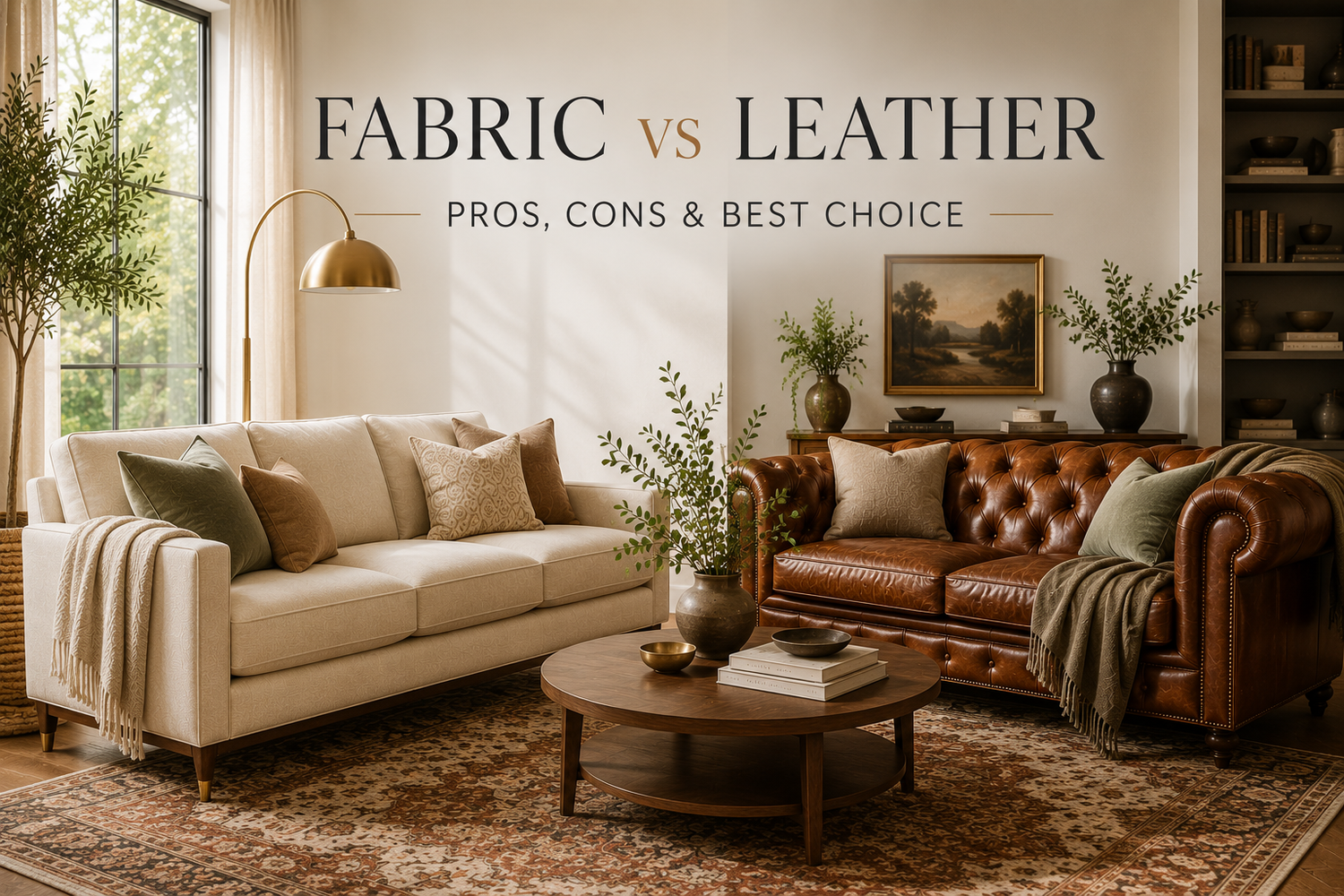
A leather sofa typically lasts 15 to 25 years and cleans up with a damp cloth, while a fabric sofa offers more colors, softer comfort, and a lower starting price but shows wear faster. Pick leather for longevity and easy cleanup; pick fabric for comfort, warmth, and variety.
Fabric sofas feel softer, warmer, and come in nearly endless color and texture choices. Leather sofas last longer, clean up faster, and develop character with age. Fabric is usually the right pick for families with young kids, in cold climates, or when comfort comes first. Leather is the right pick for households with pets, allergy concerns, or anyone who wants one investment piece that lasts 20-plus years. Performance fabrics now close most of the gap, making this a closer race than it used to be.
How Do Fabric Sofas Really Perform?
Fabric upholstery covers everything from linen and cotton to velvet, chenille, boucle, and modern performance weaves. The category is huge, and that variety is half the appeal. You can match a fabric sofa to almost any room palette, and you can swap pillows or throws to refresh the look without buying a new piece.
Where fabric used to lose to leather was stains and durability. That has changed. Brands now build sofas with performance fabrics Crypton, Sunbrella, Inside Out that resist liquids, repel pet hair, and clean with mild soap. A modern performance-fabric Sofas can absolutely survive toddlers and golden retrievers without giving up softness.
Fabric Strengths
Warmer feel in cooler months and against bare skin
Hundreds of color, pattern, and texture options
Lower starting price across all tiers
Slipcover options make stains easy to handle
Quieter no creaks, squeaks, or sticky-skin moments in summer
Fabric Weaknesses
Absorbs odors more than leather, especially from pets or smoke
Pet claws can pull threads on woven fabrics
Stains can become permanent if not blotted immediately
Standard cotton and linen show wear within 5 to 8 years
How Leather Sofas Really Perform?
Leather is the original sofa material, and it is still standing for a reason. A high-quality top-grain or full-grain leather sofa is not a trend, it is an heirloom. The leather softens with use, develops patina, and is among the easiest surfaces to wipe down. Spilled coffee, dog fur, kid fingerprints none of these are permanent on leather.
The catch is that leather quality varies wildly. Bonded leather (essentially leather scraps glued together) peels within two or three years and should be avoided. Top-grain and full-grain leathers are the real investment grades.
Leather Strengths
Lifespan of 15 to 25+ years with basic care
Spills wipe off with a damp cloth in seconds
Develops beautiful patina (the surface improves with age)
Hypoallergenic does not trap dust mites or dander
Resists pet hair and lint
Leather Weaknesses
Cold in winter, sticky in humid summer (unless climate-controlled)
Pet claws can scratch usually buffs out but visible
Limited color palette compared to fabric
Higher upfront cost across every tier
Sun exposure causes fading and drying must be kept from direct light
Side-by-Side Comparison
The honest scorecard, point by point.

Which Wins by Lifestyle?
Young Families
Performance fabric. Spills, snacks, sippy cups, everything that hits the cushion needs to come back out. A modern performance-weave sofa with removable covers is more forgiving than even the best leather.
Pet Owners (Dogs)
Leather, by a wide margin. Hair brushes off in seconds. Even with the occasional claw mark, leather looks intentional with age.
Pet Owners (Cats)
This is the toughest call. Cats can shred either material, but tightly-woven performance fabrics with low-loop weave hold up best. A scratching post on a separate side of the room is non-negotiable.
Allergy Sufferers
Leather every time. Fabric traps dander and dust no matter how often you vacuum.
Cold Climates
Fabric. Leather feels icy from October to April unless your home is warm and humidity-controlled.
Long-Term Investment Buyers
Full-grain leather. Bought once, kept for two decades, looks better year five than year one.
Pros and Cons
The simplest summary.

Who Should Buy This?
Each material wins clearly for different households.
Fabric: families with young kids who need affordable, washable seating
Fabric: anyone in a cold climate who values warm, cozy comfort
Fabric: style-forward buyers who change their decor every few years
Leather: pet owners who want easy cleanup and odor resistance
Leather: allergy sufferers who need hypoallergenic upholstery
Leather: long-term buyers willing to spend more once for 20+ years of use
Who Should Avoid This?
Each material has dealbreakers too.
Fabric: avoid if anyone in the home has serious dust or dander allergies
Fabric: avoid pure white cotton or linen without a slipcover backup
Fabric: avoid loose weaves and boucle with active cats
Leather: avoid in homes without climate control (hot summers, cold winters)
Leather: avoid bonded or split-leather it cracks and peels within 2–3 years
Leather: avoid placing near direct sun, which dries and fades the surface
Design and Styling Tips
Both materials benefit from the same finishing touches but a few rules differ.
Fabric sofas pair beautifully with leather accents (leather chair, leather ottoman)
Leather sofas need soft balance add a wool throw and linen pillows
Always anchor either piece with a textured Area Rugs
Light leather looks airy; dark leather looks moody pick by the room mood
On fabric, layer three pillow textures (linen, velvet, boucle) for depth
Warm metals (brass, aged gold) work better than chrome with both see Floor Lamps and Table Lamps
Maintenance and Care Tips
Routine matters more than reactive cleaning.
Vacuum both weekly with the upholstery brush attachment
Fabric: blot spills with a clean white cloth and mild soap immediately
Leather: dust weekly and condition every 6 to 12 months with leather cream
Rotate cushions every two weeks to keep wear even
Keep both out of direct sunlight to prevent fading and drying
Address pet odors quickly fabric absorbs faster than leather
Budget Considerations
Expect these ranges in 2026 across both categories.

Latest Furniture Trends for 2026
Sofa upholstery in 2026 reflects warmer materials and longer-term thinking.
Performance fabrics now standard on mid-range and above
Cognac, caramel, and honey leather over pure black or dark brown
Boucle and chenille continue dominating fabric sofas
Slipcovered linen-look performance fabrics surging
Saddle leather and pull-up leather (patina-forward) gaining ground
Mixed-media sofas (fabric body + leather arm panels) trending in modern rooms
Where to Buy the Right Sofa Material?
Dream Decor stocks both fabric and leather options across every budget tier, with real swatches available for every fabric and leather sample available in the showroom. Visit our Furniture Store in Springfield MA or Furniture Store in West Springfield MA to physically compare cushions, smell the leather, and check fabric textures before you decide.
Browse our online Sofas and Sectional Sofas collections to filter by material, color, and dimensions. Our team can ship free swatches anywhere in Massachusetts within a week.

Leave a comment
All comments are moderated before being published.
This site is protected by hCaptcha and the hCaptcha Privacy Policy and Terms of Service apply.